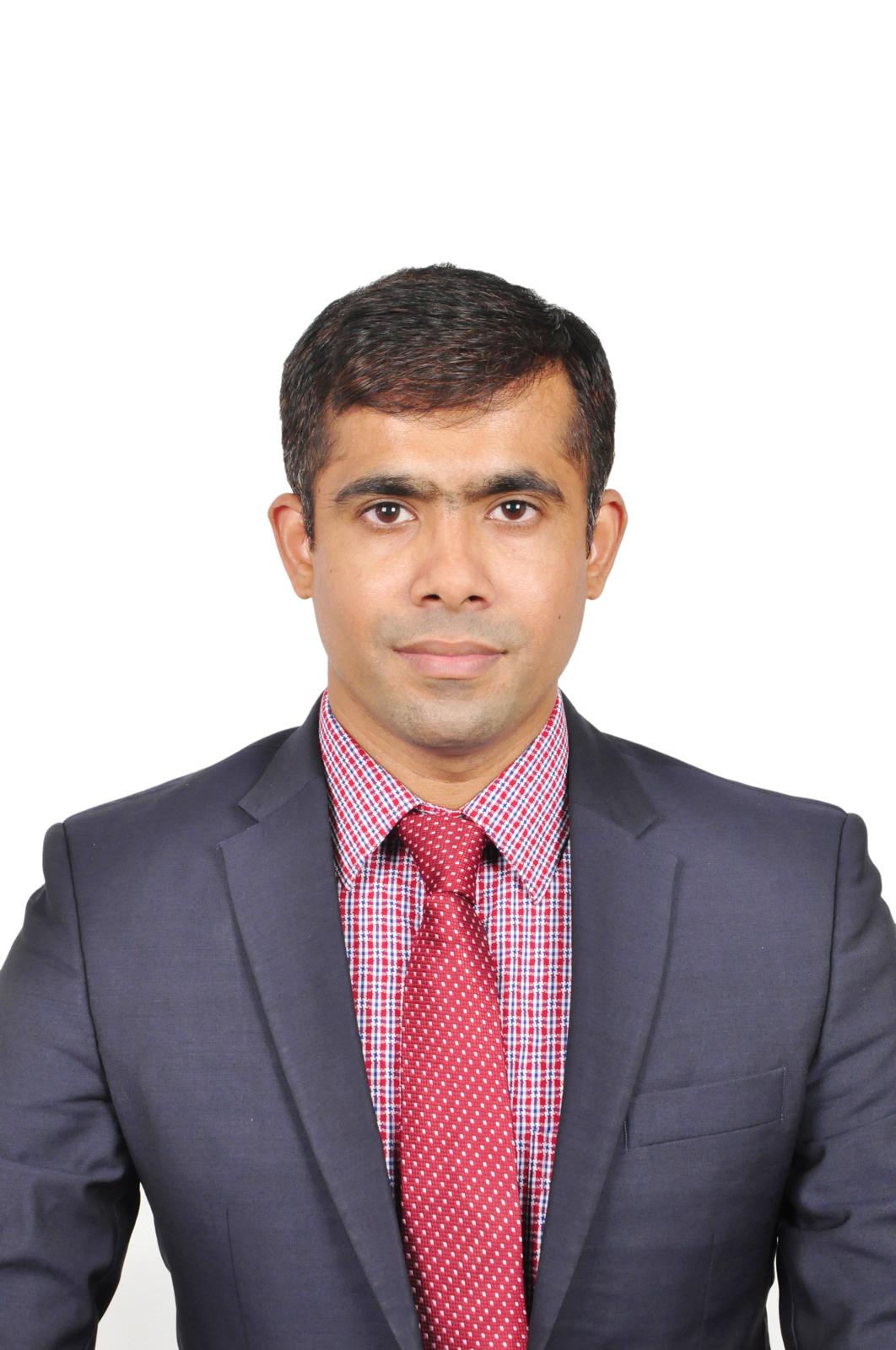
Advancing Audit Quality Through Technology and Data Analytics
Developing practical methods for audit-risk assessment, fraud-risk identification, and internal-control evaluation.
12+Years In Audit & Advisory
US CPALicensed In United States
ICAB FCAFellow Chartered Accountant
7+Published AI & Fraud Papers
The Journey & Research Mission
Bridging Professional Auditing with AI-Driven Innovation.
My professional journey combines over 12 years of experience in auditing, financial reporting, and internal controls with a growing focus on applied research in artificial intelligence (AI) and financial-reporting fraud detection. Through my experience with Big Four and other public accounting firms in the United States and South Asia, I have developed a strong understanding of the practical challenges auditors face in identifying financial risks and evaluating increasingly complex transactions.
As a U.S. Certified Public Accountant (CPA) and ICAB Fellow Chartered Accountant (FCA), with graduate education in accounting and business analytics, I have managed complex audit engagements involving PCAOB auditing standards, SEC reporting requirements, and financial-reporting controls. I have also contributed to the development, testing, and implementation of AI-based audit software, helping translate professional audit requirements into practical technology-enabled workflows.
My research endeavor focuses on bridging the gap between emerging AI technologies and their practical application in auditing. I am developing and evaluating explainable, AI-assisted methodologies for audit-risk assessment, anomaly detection, fraud-risk identification, and internal-control evaluation. Through research publications, software prototypes, and professional knowledge sharing, my goal is to contribute to more effective audit practices, reliable financial reporting, and stronger investor confidence in the United States and internationally.
In-depth execution of audits under US GAAP, PCAOB standards, and IFRS. Rigorous ICFR assessments (SOX 404), substantive testing, and SEC financial statement disclosures.
AI & Fraud Innovation
Empirical investigation into auditor trust, hybrid Graph Neural Networks (GNNs), and Large Language Models (LLMs) to enhance forensic accounting and threat detection.
Analytics & Due Diligence
Combining data analytics, statistical sampling, financial modeling, and transaction due diligence to support executive governance and audit committee mandates.
Research Endeavor
Advancing Audit Automation, Financial Reporting Integrity, and Fraud Detection Through Artificial Intelligence
My research focuses on developing and evaluating practical artificial intelligence (AI)-assisted auditing methodologies to improve financial-reporting risk assessment, fraud detection, internal-control evaluation, and audit quality.
As businesses increasingly rely on complex financial systems and process larger volumes of transactions, traditional audit procedures face growing challenges in identifying unusual activities, financial irregularities, and potential fraud risks. Although AI and machine learning offer promising solutions, there remains a gap between emerging technologies and their reliable application in everyday audit practice.
My research aims to bridge this gap by developing explainable, evidence-based analytical tools that help auditors identify financial-reporting risks more effectively while maintaining professional judgment, skepticism, and human oversight.
Key Research Areas
I am developing analytical methods that combine financial-statement analysis, transaction-level risk indicators, and machine-learning techniques to identify unusual trends, journal entries, and financial relationships.
The research explores statistical anomaly detection, rule-based screening, and explainable risk assessment to help auditors identify areas requiring further investigation.
My initial web-based research prototype, AI-Assisted Audit Risk & Fraud Detection Analyzer (Version 1.0), has been publicly deployed and is undergoing testing and refinement.
This research explores how data analytics and AI-assisted workflows can improve the efficiency, consistency, and effectiveness of traditional audit procedures.
I plan to develop and test methods for analyzing larger transaction populations, identifying higher-risk items, supporting sample selection, and connecting assessed risks with appropriate audit procedures.
The resulting methodologies will be evaluated against established auditing requirements and professional practices.
I plan to develop an AI-assisted framework that combines financial transactions, approval records, user-access information, and internal-control questionnaires to identify potential control weaknesses and fraud-risk indicators.
The proposed methods will use rule-based control testing, machine learning, process analysis, and explainable AI to identify unusual patterns, segregation-of-duties conflicts, and deviations from established control procedures.
The objective is to support earlier identification of potential financial-reporting risks and more focused professional investigation.
A central part of my research is evaluating whether AI-assisted methods provide meaningful improvements over conventional audit analytics.
I intend to test the tools using publicly available, synthetic, or properly authorized datasets and compare their results with established audit procedures. Evaluation will consider risk identification, false-positive rates, reproducibility, processing efficiency, and the usefulness of analytical findings to audit professionals.
I also plan to share research findings through academic publications, professional presentations, demonstrations, and accessible research tools, subject to confidentiality, security, and intellectual-property requirements.
Research Progress
My work builds on more than twelve years of experience in auditing, financial reporting, risk assessment, and internal-control evaluation, together with my qualifications as a Certified Public Accountant (CPA) and Fellow Chartered Accountant (FCA).
I have contributed audit-methodology expertise to the development, testing, and implementation of AI-based audit software, including workflows for audit planning, risk assessment, materiality, sampling, and substantive testing.
My research activities also include scholarly publications on AI and financial-reporting fraud detection, presentations to academic and accounting-professional audiences, and the development of my first publicly accessible research application.
Research Prototype
AI-Assisted Audit Risk & Fraud Detection Analyzer — Version 1.0
An early-stage, web-based research application supporting comparative financial-statement analytics, preliminary risk screening, statistical anomaly identification, and suggested audit procedures.
This prototype is intended for research, education, and preliminary risk screening. It does not determine whether fraud has occurred or replace an auditor's professional judgment.
Expected Contribution
My long-term goal is to support the responsible modernization of auditing by connecting AI research with practical financial-reporting and assurance requirements.
Through the development, validation, and dissemination of reusable analytical methodologies, I hope to help external and internal auditors, accounting firms, financial-reporting professionals, educators, and researchers better understand financial risks and improve the reliability of audit processes.
The broader purpose of this endeavor is to strengthen financial-reporting integrity, support investor confidence, and contribute to the continued advancement of auditing practices in the United States and internationally.
Empirical Research & Scholarly Work
Publications that bridge accounting integrity and artificial intelligence.
Seven published research papers on fraud detection, auditor trust, graph neural networks, enterprise security and financial markets.
Filter by topic:
AI & Audit QualityPublishedSep 7, 2026 (published online)
Artificial Intelligence in Financial Reporting Fraud Detection: An Empirical Investigation of Auditor Trust as a Mediating Mechanism in U.S. Markets
Mohammad Musa Mia, Md Zahurul Islam, Abu Sayed, Faysal Ahmed, Ataur Rahman, Mohammad Ariful Aziz, Md Samirul Islam
Author 1 of 7
Journal of Applied Finance & Banking · Vol. 16, No. 6, pp. 1–29 · SCIENPRESS Ltd
Research method
Cross-sectional structured questionnaire of 450 U.S. auditing and financial-reporting professionals, analysed with Partial Least Squares Structural Equation Modelling (SmartPLS 4) and 5,000-sample bootstrapping.
Key finding
Explainable AI, predictive capability, data quality and AI governance all significantly predicted auditor trust in AI (R² = 0.697); trust in turn strongly predicted perceived fraud-detection effectiveness (β = 0.724, p < .001; R² = 0.524) and mediated all four effects.
A Hybrid Graph Neural Network and Large Language Model Framework for Insider Threat Detection via Behavioral Graph and Semantic Profiling
Md Abu Sufian Mozumder, Mohammad Musa Mia, Rumana Akther Nipa, Asaduzzaman Anik, klachur Rahman Bhuiyan, Sharmin Akter, Mashaeikh Zaman Md. Eftakhar Choudhury
Author 2 of 7
Colombo Scientific Journal of Computer Science & Information System · Vol. 11, No. 05, pp. 22–32
Research method
Hybrid model fusing a Graph Neural Network (behavioral graph of users, devices and resources) with a Large Language Model (semantic profiling of logs and communications), evaluated on the CERT Insider Threat dataset and the Kaggle UEBA dataset against machine-learning, sequence-based and single-modality deep-learning baselines.
Key finding
The authors report the hybrid model outperforming all baselines, with accuracy 0.96, F1-score 0.92 and ROC-AUC 0.95.
Enhancing Enterprise Security Management Using Hybrid Machine Learning and Large Language Model–Assisted Intrusion Detection
Mohammad Musa Mia, Md Mohibur Rahman, Md Abu Sayed, Rumana Akther Nipa, Sonjoy Kumar Dey, Kazi Abu Jahed, Md Yassir Mottalib
Author 1 of 7
The USA Journals (TAJET) · Vol. 8, No. 2, pp. 170–178
Research method
Hybrid intrusion-detection framework combining ensemble machine learning with LLM-assisted reasoning, evaluated on the CICIDS2017 dataset against logistic regression, SVM, random forest and gradient boosting.
Key finding
The hybrid model achieved the highest accuracy, precision, recall, F1-score and ROC-AUC of the models compared, with the LLM layer providing explanations intended to reduce false positives (the abstract gives no numeric values).
Integrating Blockchain Security and Machine Learning for Fraud Detection in the U.S. Banking System
Mohammad Musa Mia, Molay Kumar Roy, I K M Saameen Yassar, Md Yassir Mottalib, Syed Yezdani, Alifa Majumder Nijhum, Rumana Shahid, Md Kafil Uddin
Author 1 of 8
The USA Journals (TAJET) · Vol. 7, No. 11, pp. 65–76
Research method
Framework pairing an immutable blockchain ledger layer with five supervised models (logistic regression, decision tree, random forest, gradient boosting, neural network), trained on an open-source UCI Machine Learning Repository dataset after scaling, encoding and class balancing.
Key finding
The neural network performed best, reaching 99.1% accuracy, 98.6% precision, 98.9% recall and 98.7% F1-score, and the authors report that adding the blockchain layer improved detection performance.
Leveraging Graph Neural Networks for Intelligent Supply Chain Risk Management in the Era of Industry 4.0
Fariha Noor Nitu, Mohammad Musa Mia, Molay Kumar Roy, Syed Yezdani, Bilge Findik, Rumana Akther Nipa
Author 2 of 6
International Interdisciplinary Business Economics Advancement Journal · Vol. 6, No. 10, pp. 21–33
Research method
Suppliers and buyers modelled as nodes and transactions as edges; Graph Convolutional Network and Graph Attention Network (GAT) trained on the UCI Supplier Relationship dataset and compared with logistic regression, random forest and gradient boosting.
Key finding
Graph-based models, especially the Graph Attention Network, outperformed the traditional baselines, with the GAT reaching 92.1% accuracy.
Enhancing Financial Statement Fraud Detection through Machine Learning: A Comparative Study of Classification Models
Mohammad Musa Mia, Abdullah Al Mamun, Md Parvez Ahmed, Sanjida Akter Tisha, S M Ahsan Habib, Fariha Noor Nitu
Author 1 of 6
The USA Journals (TAJET) · Vol. 7, No. 09, pp. 166–175
Research method
Comparative study of five classifiers (logistic regression, SVM, random forest, gradient boosting machines, deep neural networks) on a publicly available dataset, after preprocessing and feature selection and extraction.
Key finding
Gradient boosting performed best (94% accuracy, 91% precision, 88% recall, AUC-ROC 0.96); random forest was strong at balancing recall and F1-score, supporting ensemble methods for financial-statement fraud detection.
Investment & Market Growth Analysis: Insights into U.S. Retail Stock Performance, Emerging Players, M&A Trends
Kazi Obaidur Rahman, Mehedi Hasan, Achhia Khanam, Farhan Nasrullah, Mohammad Musa Mia, Shamina Sharmin Jishan, Rezwanul I Rezvi
Author 5 of 7
Journal of Economics, Finance and Accounting Studies (JEFAS) · Vol. 7, No. 3, pp. 112–117 · Al-Kindi Center for Research and Development
Research method
Descriptive, narrative analysis of secondary sources (industry reports and market data); the paper has no explicit methodology section.
Key finding
Reports U.S. retail sales of about $7.2 trillion in 2024, retail M&A value above $140 billion in FY2023 (up 18%), and identifies omnichannel retailing, sustainability and AI-driven innovation as key growth areas.
Distinguished experience across Big 4 and U.S. capital market assurance.
Demonstrated track record of delivering rigorous audit quality, navigating complex regulatory regimes, and leading high-performing professional teams.
TAAD LLP
CURRENT
Sep 2026 – Present · 2 mos·Los Angeles, California, United States
Audit Supervisor
Sep 2026 – Present · Full-time · On-site
WWC, P.C.
Jan 2025 – Sep 2026 · 1 yr 9 mos·Los Angeles County, California, United States
Manager, Audit
Jan 2025 – Sep 2026 · Full-time · On-site
Managed multiple teams, overseeing in-charges and audit assistants while ensuring compliance with SEC and PCAOB requirements.
Delivered assignments to clients on time and maintained excellent client relationships.
Ensured efficient information flow between clients and the audit team, resulting in high-quality deliverables.
Reviewed team work and gave timely feedback; monitored, managed and motivated the team to meet quality standards and deadlines.
Assisted the Partner in monitoring audit service effectiveness; identified and escalated risks and accounting and auditing matters to engagement partners and client management.
Supervised, coached and evaluated staff, and participated in the performance appraisal process.
Worked with the development team to provide user requirements and test the audit module of an in-house audit software project.
KPMG US
Feb 2022 – Mar 2024 · 2 yrs 2 mos·Los Angeles, California, United States
Senior Associate
Feb 2022 – Mar 2024 · Full-time · On-site
Designed and performed detailed audit procedures to ensure financial statements were free from error and in line with US GAAP, PCAOB, AICPA and other applicable requirements.
Performed complex audits and technical accounting (ASC 606, ASC 805 and ASC 842), including drafting memos and presenting issues to the business.
Led several audits as team lead and liaison between client management and KPMG leadership.
Reviewed management's internal control environment for SOX and PCAOB compliance, and communicated control lapses through management letter reports.
Performed risk assessment procedures and applied data analytics techniques for fraud and error detection.
Managed multiple engagements simultaneously, and supervised, mentored and coached junior team members.
KPMG Bangladesh
Oct 2019 – Jan 2022 · 2 yrs 4 mos·Bangladesh
Manager
Jan 2020 – Jan 2022 · 2 yrs 1 mo · Full-time
Managed multiple teams, overseeing in-charges and audit assistants to ensure compliance with statutory and KPMG requirements.
Reviewed audit evidence, audit documentation and financial statements prepared under IFRS and local requirements.
Managed audit teams on group-reporting engagements to KPMG India, KPMG Canada, EY Korea and KPMG Switzerland.
Used KPMG Audit Methodology (KAM) and conducted training sessions on KCw, eAudIT, IFRSs, ISAs and KAM.
Faced KPMG's top-layer reviewers (Engagement Partner, EQCR, Audit Quality Team, 2LoD) and reviewed files as a 2LoD reviewer for selected engagements.
Assistant Manager
Oct 2019 – Dec 2019 · 3 mos · Full-time
Managed audit teams, overseeing in-charges and audit assistants, and delivered assignments on time with strong client relationships.
Reviewed team work and audit evidence, and prepared financial statements based on IFRS and local requirements.
Supervised and coached staff, and took part in the performance appraisal process.
IPDC Finance
Nov 2017 – Sep 2019 · 1 yr 11 mos·Dhaka, Bangladesh
Manager, Finance & Accounts
Apr 2018 – Sep 2019 · 1 yr 6 mos · Gulshan, Dhaka
Prepared annual financial statements and developed and updated policies, manuals and SOPs.
Managed tax and VAT, including return filing and liaison with the authorities.
Handled external, Bangladesh Bank and National Board of Revenue audits, and drove corrective action on audit observations.
Core team member (GL Manager) in the implementation of Core Banking Software (CBS).
Tax Manager
Nov 2017 – Sep 2018 · 11 mos
Prepared and reviewed quarterly and annual financial statements under IFRS and regulatory requirements for the Board, SEC and Central Bank.
Managed financial close processes and served as primary liaison for external and internal audits.
Assistant Manager, Finance & Accounts
Nov 2017 – Mar 2018 · 5 mos
Prepared quarterly and annual financial statements and handled tax and VAT management.
Interfaced with the external audit team and Bangladesh Bank inspection team, and kept financial control over the core banking system.
KPMG Bangladesh
Oct 2012 – Oct 2017 · 5 yrs 1 mo·Dhaka, Bangladesh
Associate
Jan 2016 – Oct 2017 · 1 yr 10 mos
Reviewed internal business processes, identified control weaknesses and developed risk control matrices under the internal control framework and SOX compliance.
Evaluated the design and operating effectiveness of internal controls from a SOX compliance perspective.
Audited financial statements under International Standards on Auditing and reviewed interim financial reports.
Performed fund audits of non-governmental organizations receiving global donor funding; worked with KPMG Singapore and KPMG India teams.
Audit Assistant
Oct 2012 – Dec 2015 · 3 yrs 3 mos · Full-time
Conducted external audits of local and multinational organisations, banks and NGOs under BSA/ISA and KPMG Audit Methodology.
Reviewed financial statements for compliance with BFRS/IFRS, the Companies Act 1994 and other applicable laws.
Performed special audits such as SOX control testing, portfolio reviews of financial institutions, and tax due diligence (TDD).
Core Competencies
The audit & analytics operating system.
A comprehensive matrix of technical assurance expertise, regulatory compliance, and computational analytics.
Financial Statement Audit
Comprehensive execution and review of statutory and SEC audits. Full mastery of US GAAP, PCAOB Auditing Standards, and IFRS.
US GAAPPCAOBIFRSMateriality & SamplingKey Audit Matters (KAM)
AI & Fraud Detection Modeling
Empirical research and practical implementation of Graph Neural Networks and machine learning classifiers to flag transaction anomalies and fraud risk.
Review of Forms 10-K, 10-Q, 8-K, and registration statements. Resolution of complex GAAP interpretations including ASC 606, ASC 842, and CECL.
SEC Form 10-K / 10-QASC 606 RevenueASC 842 LeasesTechnical Memos
Internal Controls & SOX 404
Evaluating Internal Controls over Financial Reporting (ICFR), entity-level controls, IT General Controls (ITGC), and remediation tracking for material weaknesses.
Quality of Earnings (QoE) analyses, debt-like item identification, normalized EBITDA calculations, and working capital peg adjustments for M&A transactions.
Quality of EarningsEBITDA BridgeWorking Capital PegsTransaction Advisory
Analytics, Python & Tech Stack
Leveraging modern analytical tools to process massive financial ledgers, automate substantive audit tests, and build predictive risk dashboards.
Python & PandasSQL QueriesPower BI DashboardsAdvanced Financial Models
Professional Track Record & Impact
Results behind the assurance opinions.
Measurable impact delivered across international capital markets, cross-border audits, and empirical research.
$2B+
Client Asset Value
Audited across commercial banking, manufacturing, technology, and SEC registrant portfolios.
100+
Audit Engagements
Statutory audits, reviews, and due diligence assignments successfully delivered on schedule.
5+
Peer-Reviewed Studies
Published papers covering AI in financial fraud detection, GNNs, and auditor trust dynamics.
10+
Years Professional Practice
Across Big 4 accounting (KPMG) and United States certified public accounting firms.
2
Premier Designations
Licensed US CPA (Certified Public Accountant) and ICAB FCA (Fellow Chartered Accountant).
AI-Driven
Audit Technology Innovation
Contributed to the development, testing, and implementation of AI-assisted audit software covering risk assessment, materiality, sampling, and substantive testing.
Philosophy & Standards
“The true value of an audit is not merely regulatory compliance—it is establishing trust that powers global capital allocation.”
— Mohammad Musa Mia, CPA, FCA
ICAB Fellow (FCA)
Admitted May 2023 · Highest ICAB Rank
Qualifications & Global Networks
Qualified locally. Recognized globally.
Dual premier accounting designations bridging the United States and international regulatory frameworks.
Active License
Certified Public Accountant (CPA)
AICPA & State Board of Accountancy, United States
Authorized to conduct statutory audits, sign financial opinions, and represent clients before regulatory authorities under US GAAP & PCAOB.
Qualified Verified
Fellow Member (FCA)
Fellow Chartered Accountant (FCA)
Institute of Chartered Accountants of Bangladesh (ICAB)
ICAB Fellow rank awarded after exemplary professional practice, extensive post-qualification experience, and leadership in the accounting profession.
Admitted May 2023 Verified
Master's Degree
MBA in Business Analytics
International American University (Los Angeles, California)
Advanced training in predictive modeling, statistical forecasting, enterprise machine learning applications, and data-driven corporate governance.
Verified
Bachelor's Degree
BBA in Accounting & Information Systems
University Degree in Accounting
Rigorous undergraduate foundation in financial accounting, auditing theory, corporate law, taxation, and business computer information systems.
Four-Year Degree Verified
International Network
Chartered Accountants Worldwide (CAW)
As an ICAB Fellow Member, Mohammad Musa Mia is connected with over 1.8 million chartered accountants and students across 190+ countries in the global CAW alliance.